Mission Control
The top of the Leverage Ladder is a whole team of agents working at once. Almost nobody ever sees it happen. This page shows you.
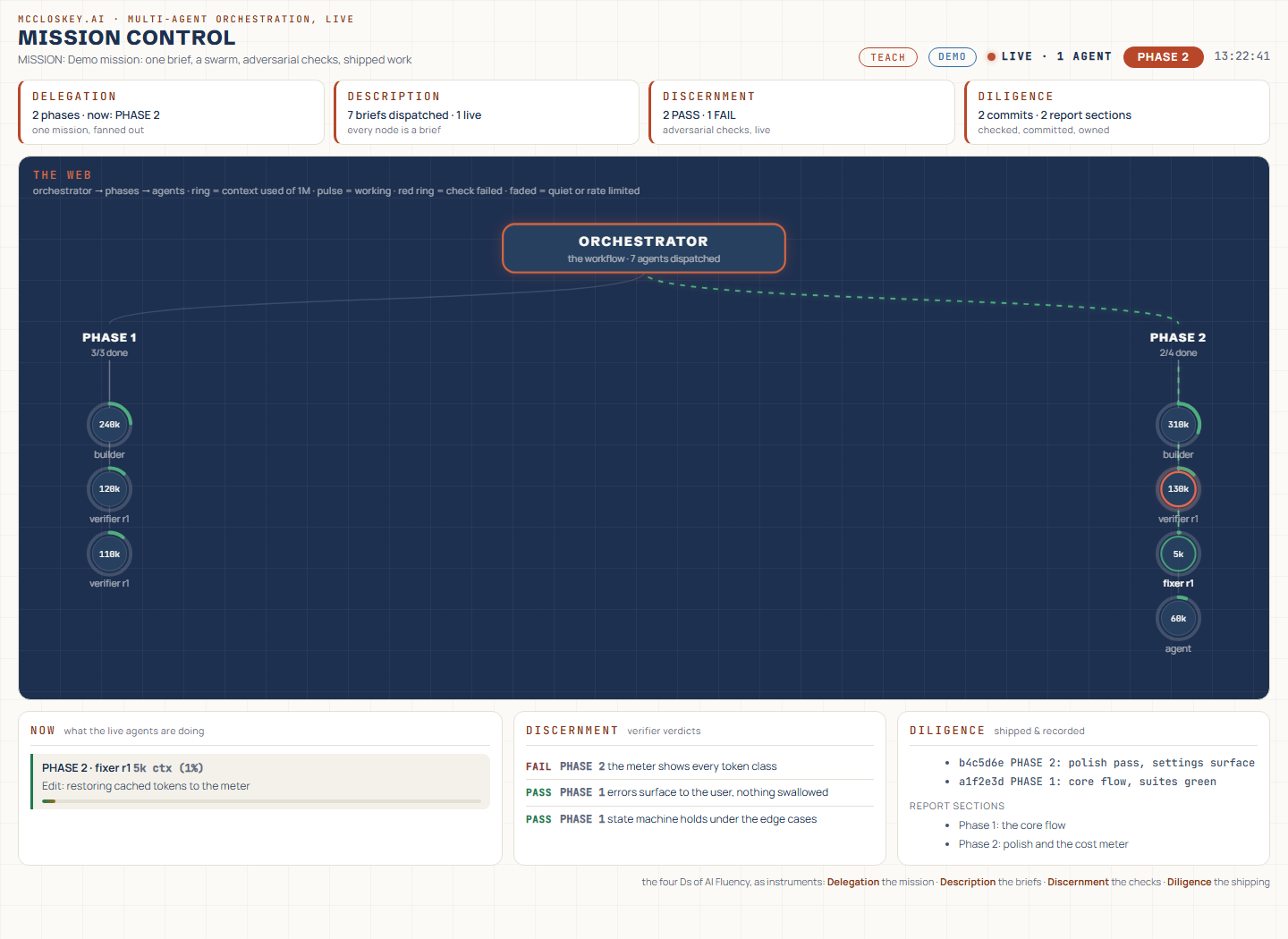
Born from a real run
The first version was built in about 20 minutes, live, while a real run of 36 agents rebuilt a working app underneath it.
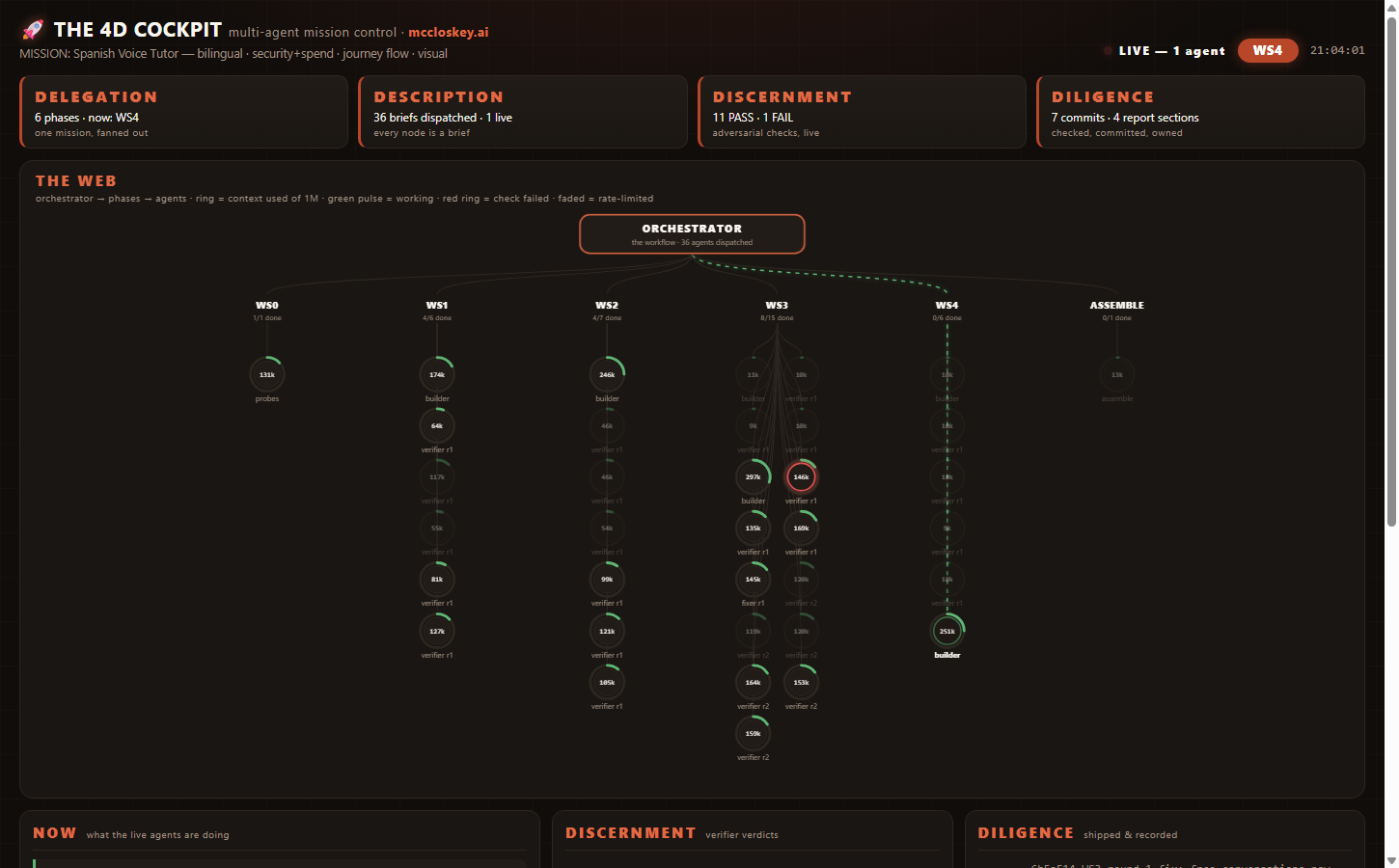
Look closer: every lane is one of the four Ds
You have met the four Ds. Here they are as instruments, operating on real work. To learn them properly: AI Fluency → and the 4D Build →
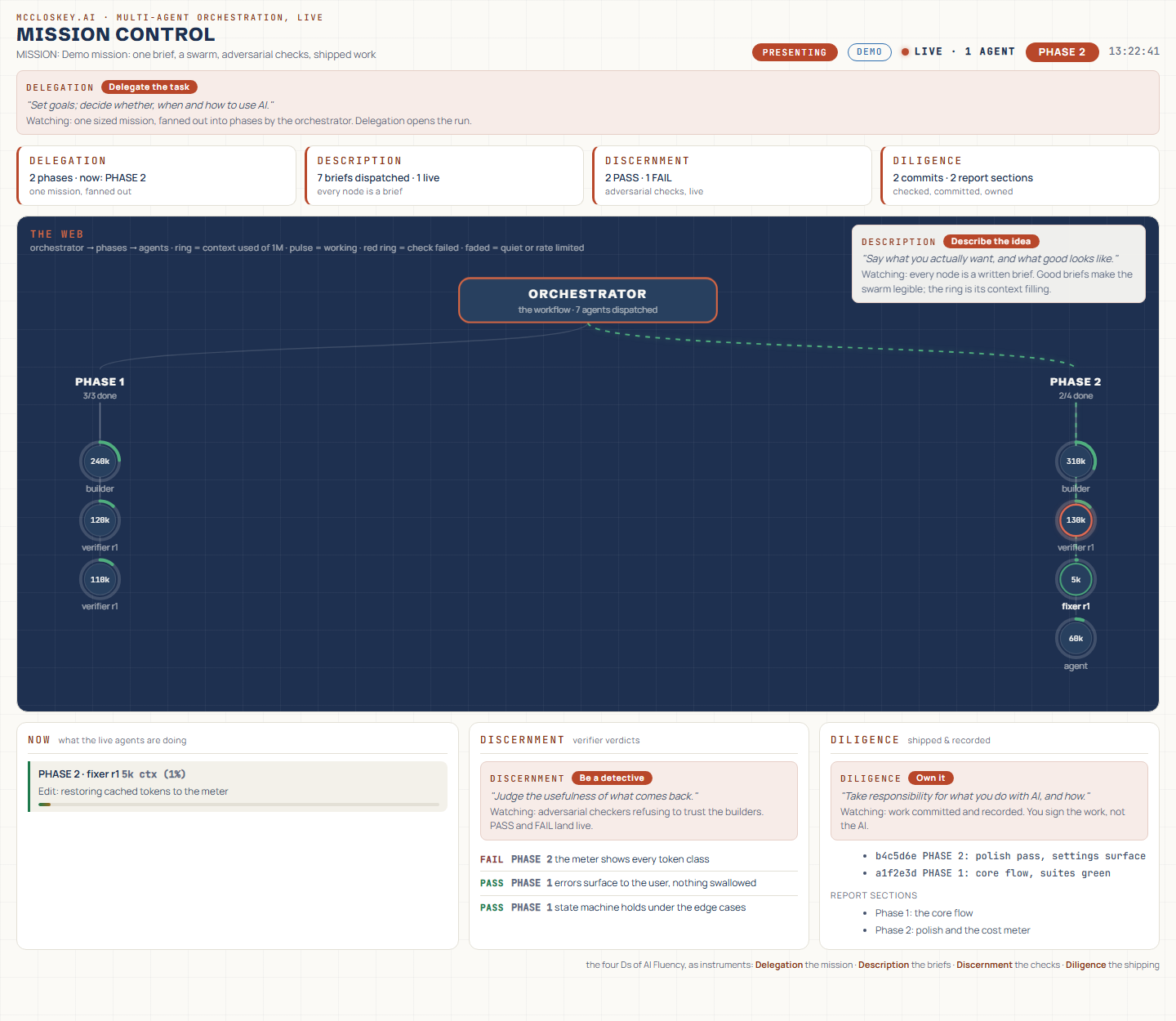
The mission bar, and the web
Decide what to hand over, and only what you can check.
One sized mission, fanned out into phases by the orchestrator.
Every node is a brief
Say what good looks like. Vague in, vague out.
Each card’s title is that agent’s written brief. Good briefs make the swarm legible. Cannot name what good looks like? The Translator interviews you and writes it.
The verdict lane · the star of the show
Judge what comes back, like an editor not a fan.
Checker agents briefed to refuse to trust the builders. PASS and FAIL land live. The checks are visible, by design.
The shipped lane
Own the result. You sign the work, not the AI.
Commits and report sections: work recorded, not merely claimed.
How it works, honestly
- The run already writes its own telemetry to disk. This just reads it.
- Each ring is one agent’s context window filling.
- Read only, local only, refreshes every three seconds.
Can I run this?
Mission Control is an instrument I built for my own runs, and you do not need one yet. What to use today: start on the ladder, then the 4D Build and the Translator. By the time a job of yours is big enough to need watching, you will be able to build your own. That is rather the point.
This is Level 6 of the Leverage Ladder → made visible. The ladder shows every step that gets you here, from a single good prompt upward.
Run the four Ds on one real thing with the 4D Build → or see how the splitting works with Subagents →
McCloskey.ai · Resources. Built for people who want to use AI well without writing code.